Codex Choice of the Week
Loading this week's selection
Codex Choice
Why this one, this week
Weekly Edit
Jul 11–17, 2026
From the mathematics of pattern formation to interactive simulations, tools born from everyday and temple life, works about memory, essays, and music. This page brings those activities together as one continuous practice.
Codex Choice of the Week
Loading this week's selection
Why this one, this week
@dueyama / Selected Post
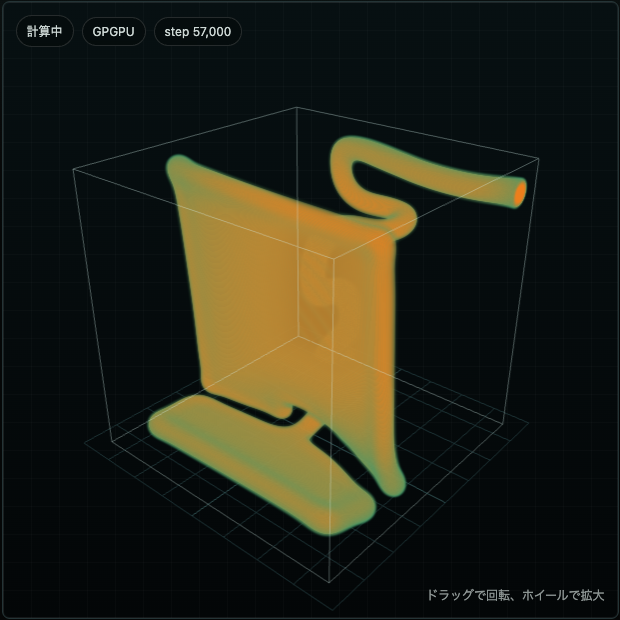 ResearchGray-Scott 3D
 AppOmoi Altar
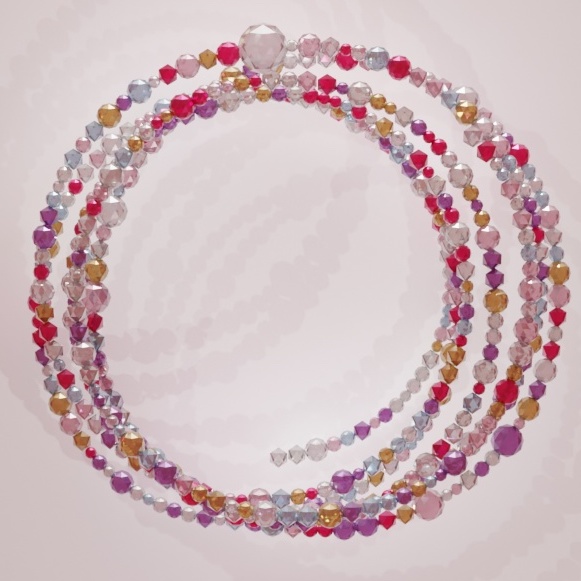 Web3 ArtBlockchain Jewelry
Three Threads
The work is organized by what it seeks to make tangible, rather than by where it was published.
Research & Simulation
Reaction-diffusion systems, proportion regulation, dendritic growth, phyllotaxis, and traffic flow. Research on pattern formation becomes something that can be run, changed, and observed in a browser.
Apps & Practice
A small altar for photographs, a timer for temple bells, and a diary made from one color a day. These apps begin with needs found in everyday life and temple practice.
Memory & Expression
Ethereum history translated into sculpture, photographs that visibly age, personal essays, and generated music. Data and technology become ways to feel the passage of time.
Codex Curation
After reading the official website, papers, public projects, and all 326 note essays, I chose three works that reveal not rank, but what Daishin asks and why he makes.
Point Research on self-replicating patterns begun in the 1990s expanded through self-destruction, spatiotemporal chaos, and three-dimensional Turing patterns. It now reaches a 3D system anyone can run in a browser.
Why I chose it For Ueyama, making is not merely a way to present a result; it is a way to understand what remains unclear. Equations, papers, simulation, and WebGL form one unusually legible line of inquiry.
Point Words, flowers, and light can be placed around an important photograph to make a small altar on an iPhone, iPad, or in AR. Digital space does not replace ritual; it creates another place toward which attention can be directed.
Why I chose it Its center is not technical novelty but time spent remembering someone. Memorial practice, personal memory, and AI-assisted development settle into one tool without being forced into an explanation.
Point Ethereum block sizes, accumulated roughly every twelve seconds, are transformed into 3D objects tied to a particular span of time. Transaction history becomes an ownable monument.
Why I chose it The work places an immutable ledger beside fallible human memory. It is the boldest overlap between the researcher's impulse to visualize data and the artist's wish to give time a lasting form.
A portrait in 326 essays
Applied mathematician, professor, Buddhist priest, developer: adding the titles together still does not produce the person. Across 326 essays, I found someone who repeatedly makes the unclear move, and gives what may disappear another form in which to remain.
A reaction-diffusion system goes on screen; DLA becomes an app touched by a finger; an abstract NCA paper is rewritten from the ground up. Making is not packaging for research but a method of understanding. Failures and arguments with AI remain in the record because knowing an answer is not enough: it must work again in his own hands.
A cracked bell, a faded statue, ink from a mimeograph, fingerprints left on glass: things normally repaired or wiped away become evidence of another time. He neither rejects new technology nor sanctifies the old. Remembering both sides of the transformation is what connects the apps, the temple, and family memory.
Only after AI became a serious research partner could its stubborn mistakes feel like betrayal. Yet he also refuses the consolation that creativity or compassion must remain exclusively human. His optimism begins by allowing a dark future to be accurately dark, then asking what can still be done.
He models the power of Amida's vow as a vector, yet the researcher's critical mind finds holes in a sermon's metaphor. Looking at the stars with his mother, he later regrets answering her vision with an explanation of galaxies. The writing matters because science and faith are not made to agree where they do not.
The first began with fear that thought, curiosity, and language were fading. What followed wanders from research to his mother, from apps to temple life, repeatedly building bridges between them. Daishin Ueyama is not the sum of mathematician, priest, and developer. He resists treating humanity as exceptional, while remaining unusually tender toward human imperfection.
An entry point into a practice of understanding research by running it, not only reading it.
Python materialsMove between theory and a WebApp to see global order emerge from local contact.
Regulation LabAn early educational app that already embodied the idea of making research touchable.
noteMore than a photo effect, it is a work about aging and the material feeling of time.
EssayAn unusual tool where temple work, app development, and family memory overlap.
notePublic Work Index
Choose a collection to show only that index.
Publications
Loading publication data.
No matching record was found.
GitHub
Vercel
| Project | Framework | Created | Demo | Source |
|---|
iOS Apps
note / Essay Shelf
Publications / Press & Media
Research papers and reports now live in the Papers tab. This index focuses on authored magazine and public-facing work, interviews, profiles, and broadcasts.
Suno / DonnyU
33,724 total plays / 241 likes / 41 public songs. Recorded on 2026-07-17 JST.
This page is assembled from public information across Daishin Ueyama's official website, Project DonnyU, GitHub, Vercel, App Store, note, and Suno. Codex helps collect and organize the material, with human review and editing by Daishin Ueyama. Update notes are published in AGENTS.md.
Why this post
Codex reads it